Engineering
Biological Resilience
“The oak fought the wind and was broken; the willow bent when it must and survived.”
― Robert Jordan, The Fires of Heaven
Connectomics
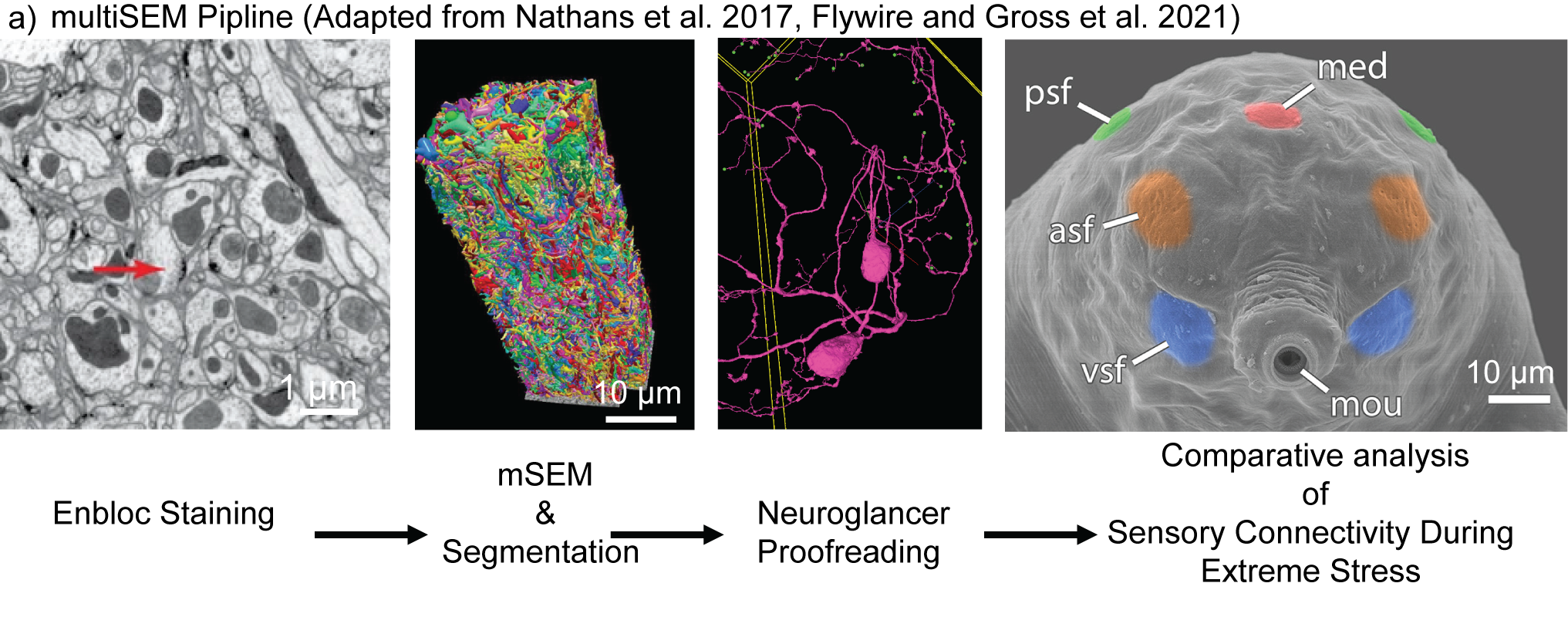
My lab, in collaboration with the Tardigrade Connectome Consortium (https://tardimap.org), will establish the first whole-animal, 4nm isotropic EM connectome of the tardigrade H. exemplaris. My team will serve as a proofreading hub for the consortium, establishing ground-truth segmentation and proofreading support as needed. Furthermore, we will focus our efforts on head sensory field connectivity and peripheral sensory connectivity, generating the first dermatome maps and assessing how they change in response to extreme environmental stresses such as anoxia and osmotic stress.
Biophysical Phase Changes and Resilience
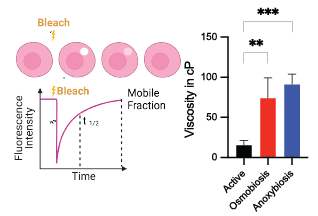
One key outstanding question from our phase-transition paper (Kirk et al. 2026) is: what are the key molecular players involved in the observed viscosity changes and intracellular phase transitions, and how are they triggered, regulated, and then dissolved as the animal returns to ambient conditions?
Neuroresilience and Behavior
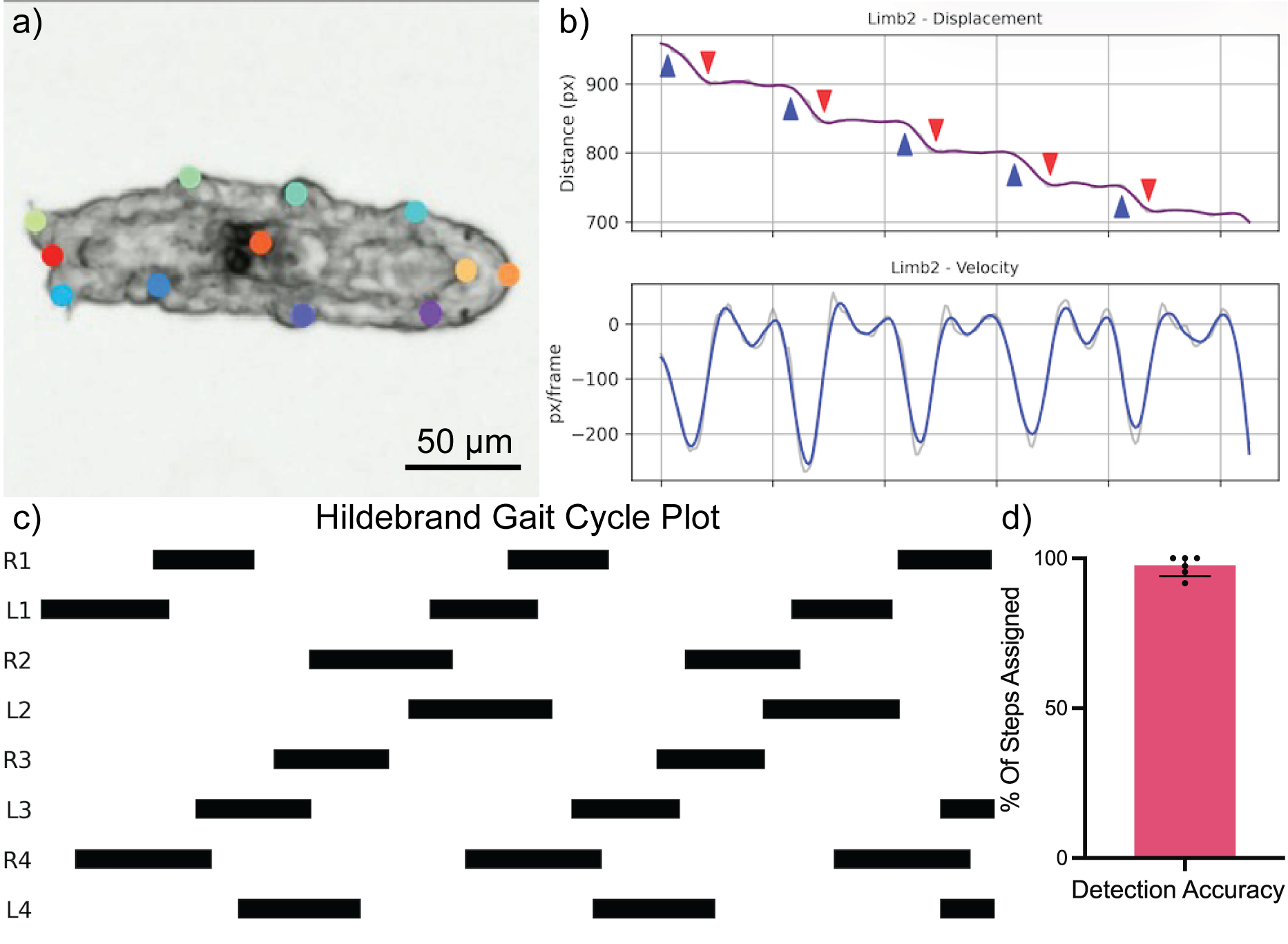
Tardigrades recover rapidly from cryptobiosis, but only after a period of visibly uncoordinated movement, which we hypothesize reflects circuit dysregulation during recovery. Monitoring neurophysiology and behavioral gait coordination will allow us to link the time course of neural reactivation to locomotor recovery, directly linking circuit-level dysregulation to the behavioral deficit.
Generating Resilient Scientists
The Impostor Phenomenon (IP) is a widespread experience of self-doubt about one's abilities that persists despite evidence of achievement, affecting an estimated 70% of people at some point in their lives, with particular relevance to STEM careers. We ask whether an evidence-based, active-learning workshop can help participants understand IP's prevalence and mechanisms while equipping them with individual, interpersonal, and community-level strategies to mitigate it. Our workshop combines a pre-workshop survey, an awareness-and-intervention session, and structured breakout discussions, with materials designed for delivery across diverse STEM populations including students, faculty, and staff.

Selected Publications:
Kirk, M. J., Xu, C., Paules, J., Rothman, J. H. (2025). Single-Animal, Single-Tube RNA Extraction for Comparison of Relative Transcript Levels via qRT-PCR in the Tardigrade Hypsibius exemplaris. Journal Of Visualized Experiments (215), e66935, doi:10.3791/66935.
Kirk, M. J. et al. (2023). Cell-Surface Targeting of Fluorophores in Drosophila for Rapid Neuroanatomy Visualization. ACS Chem Neuroscience 14, 909–916 doi: 10.1021/acschemneuro.2c00745 *ACS Editor’s Choice Award and Cover Feature.
Kirk, M. J. et al. (2021). Voltage Imaging in Drosophila Using a Hybrid Chemical-Genetic Rhodamine Voltage Reporter. Frontiers in Neuroscience 15, doi: 10.3389/fnins.2021.754027
Raliski, B. K., Kirk, M. J., & Miller, E. W. (2021). Imaging spontaneous neuronal activity with voltage-sensitive dyes. Current Protocols, 1, e48. doi: 10.1002/cpz1.48
Kirk M.J., Raliski B.K., Miller E.W. (2020). Monitoring neuronal activity with voltage-sensitive fluorophores. Methods in Enzymology. 640, 185-204. doi: 10.1016/bs.mie.2020.04.028.
Wegmann, S., Bennett, R. E., Delorme, L., Robbins, A. B., Hu, M., McKenzie, D., … Hyman, B. T. (2019). Experimental evidence for the age dependence of tau protein spread in the brain. Science Advances, 5(6), eaaw6404. https://doi.org/10.1126/sciadv.aaw6404
Wegmann, S., Maury, E. A., Kirk, M. J., Saqran, L., Roe, A., DeVos, S. L., … Hyman, B. T. (2015). Removing endogenous tau does not prevent tau propagation yet reduces its neurotoxicity. The EMBO Journal, 34(24), 3028–3041. https://doi.org/10.15252/embj.201592748
Wegmann, S., Maury, E., Kirk, M.J., Saqran, L., Hyman, B.T (2015). Lack of endogenous tau permits tau spreading and protects against tau toxicity in transgenic mice. Alzheimer's & Dementia. 11. P186. 10.1016/j.jalz.2015.07.159.
Izzo, N. J., Xu, J., Zeng, C., Kirk, M. J., Mozzoni, K., Silky, C., … Catalano, S. M. (2014). Alzheimer’s therapeutics targeting amyloid beta 1-42 oligomers II: Sigma-2/PGRMC1 receptors mediate Abeta 42 oligomer binding and synaptotoxicity. PloS One, 9(11), e111899. https://doi.org/10.1371/journal.pone.0111899